December 2021

Merry Christmas from Elle
Merry Christmas from Elle at ReproScan!
Thank you for being our customer—our entire team appreciates your business! I know you have a couple options when choosing an ultrasound, and I appreciate your choosing ReproScan. Our team continually strives to provide you with affordable, durable ultrasounds with the best possible customer service. We cannot promise that we will be perfect, but we will do our best to serve you.
A main focus of 2021 was offering practical Bovine Ultrasound Courses and Wet labs. We did many CE courses this year, If you were able to attend one, we hope you found it beneficial. If you attended a course (or webinar) and there are elements we can improve on, please let me know. I hope to offer you more courses, and some diverse training course options in 2022.
Fetal Anomalies, Fetal Demise and Failure to Calve
Experienced pregnancy testers know that a percentage of the cows and heifers that are called pregnant, fail to calve. This fact raises the question: what happened to the pregnancies? Let’s discuss a few of the many factors involved in “failure to calve”.
1. The earlier one pregnancy tests, there is increased likelihood that a percentage of the cows with viable embryos or fetuses will fail to calve. This is well documented in dairy herds where pregnancy testing with ultrasound can start as early as day 28 of gestation. Failure for these embryos to develop to term and calve normally is usually credited to the demands put on productive dairy cattle. The percentage of embryonic or fetal loss considered acceptable ranges from 2% to 15% in dairy herds depending on factors such as ambient temperature, production level in the herd, start date of pregnancy testing, level of twins and other factors.
October 2021
Should I use more than just the power button?
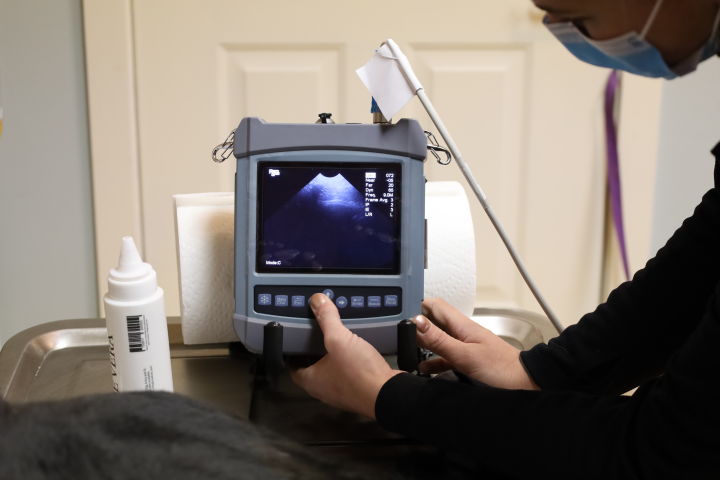
As someone who works for an ultrasound company, I often get asked, “So, how do I use this thing?” Well, there are a couple of different types of people in this world. Those who take the ultrasound out of the box, press power, and never look back. And those who read the emails we send, look at the videos, study the manual and then call with questions. Both are great—it just depends on what you want to do with your ultrasound. If you are a mixed animal practice, you will get a better image out of your ultrasound if you use different exams and play with the settings a bit. If you are doing feedlot work, you likely will never touch a button other than the power. That’s okay, you don’t have to be an expert on the minute details of your ultrasound…we are. Keep it simple, call us with your questions. We are here to help post-sale.
Challenges of Aging
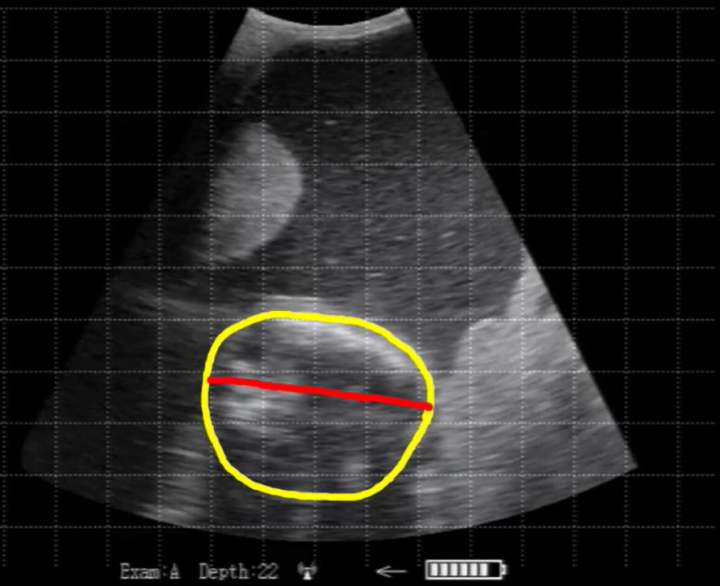
At our training courses, I hear the frustration and the desire to become more accurate at fetal aging constantly. It’s that time of year…time to preg-check and time to hear if your calls last year were accurate. Fetal aging can be a challenge depending on the situation. I did a course with Dr. Jerry Roush (Springmill Vet) a while back. He phrased it beautifully (and my paraphrasing will not do it justice) Successful fetal aging=a little bit of skill and a lot of client education and managing of client expectations. This is so true! It is really challenging to determine AI vs Bull bred when they are 110 days and 120 days. It’s quite simple at 50 and 60 days. But if you are not ultrasounding a set of cows until they are 4+ there is going to be a larger slide.
Stop, drop and roll... or drop, stop and send?
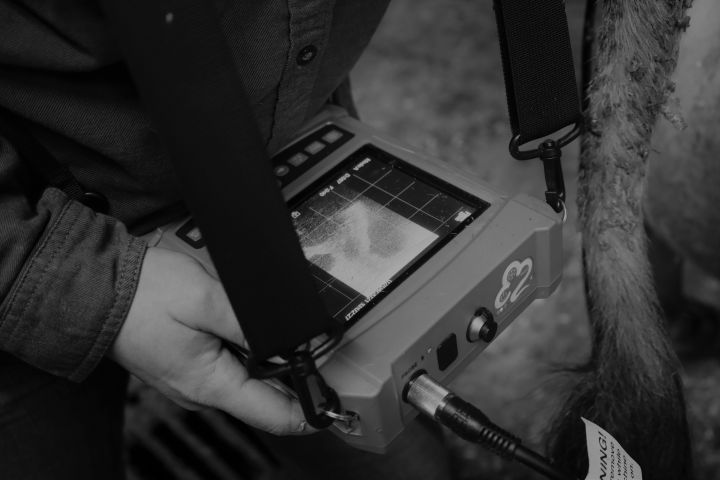
Our ultrasounds are very durable. But, sometimes, there are forces outside of your control. How do you know when to send in your machine? There are a couple of key indicators that mean you should get your ultrasound checked out!
Stop Drop Roll
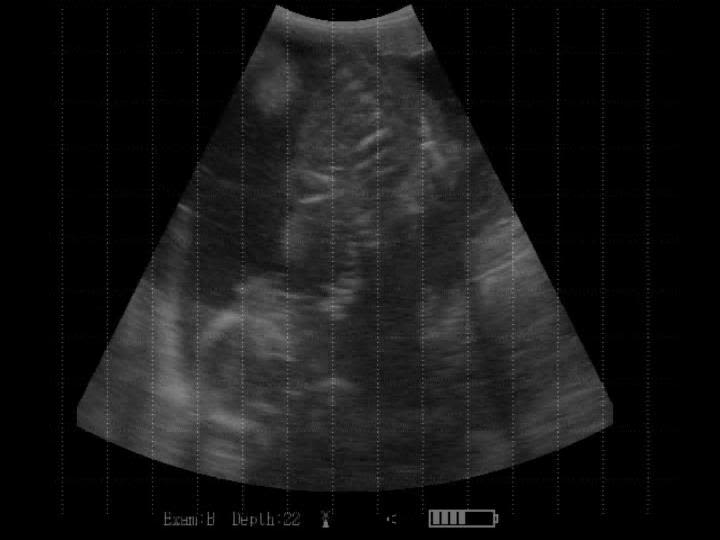
Fetal Aging – Words of caution when using placentomes
Fetal aging is a great service for clients. There are many uses for this information: calving groups, sale barn sorts, a measure of bull performance, etc. Fetal aging heifers in the 35 to 85 days post-breeding window can be very accurate. As pregnancy progresses and cow size increases, there are greater challenges that affect accuracy.
In mid-gestation, it is often difficult to visualize the fetus within the ultrasound image. Large frame and older cows add to this challenge. The fetus is deep in the abdomen and cannot be reached with the extension arm and 22cm depth setting. The only “information” available for fetal aging may be placentome size. Use this information with caution. Yes, placentomes get larger as the pregnancy advances but placentome size varies with position on the uterus and other factors. The closer the placentomes are to the fetus, the larger the placentomes. See the image below. This dissection of an 80-day pregnancy is from The Visual Guide to Bovine Reproduction (formerly called the Drost Project) on the University of Florida website. The placentomes are shown here range in size from less than 1 cm to over 2 cm. If one cannot reach the fetus with the extension arm and 22cm depth setting on the ultrasound unit, it would stand to reason that the placentomes being visualized are smaller than other placentomes that will be found near the uterus (if we could see them).
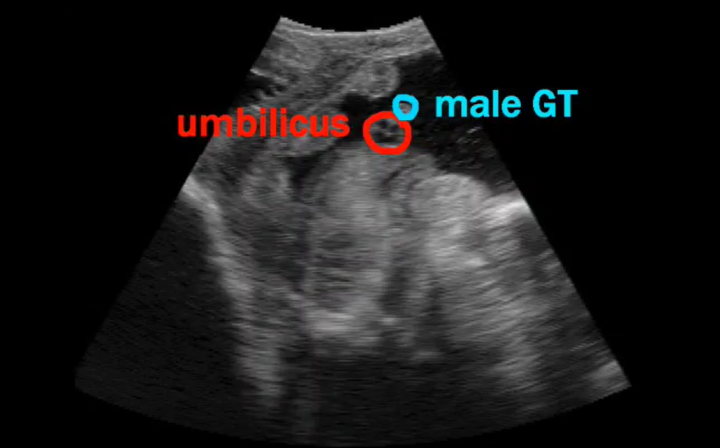
Determining Fetal Sex
Fetal gender determination is all about training your eye. This video will walk you through the basics of fetal sexing.
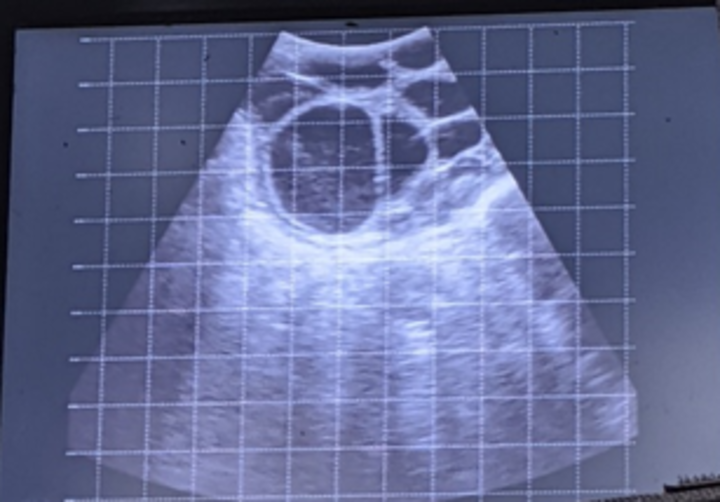
Interesting Ovaries
Curious about ovarian structures? Check out this video of some bovine ovaries!
September 2021

BECOMING A PROFICIENT ULTRASOUNDER--THE IMPORTANCE OF TRAINING YOUR EYE
Becoming a good ultrasounder is all about reading the details amidst the shades of grey. Training your eye to know what “normal” is, will be quite helpful. If you learn what a standard or normal image looks like, you will be able to determine a variation. Ultrasounding takes some effort to learn. The natural progression is pregnant/open determinationàfetal agingàfetal sexing and detailed ovarian exams. Confirming pregnancies is simple and can be learned quite quickly for most. Basic fetal aging is a natural progression shortly after pregnant/open status. Fetal sexing and advanced ovarian exams take a lot more time and number of cattle scanned to learn.
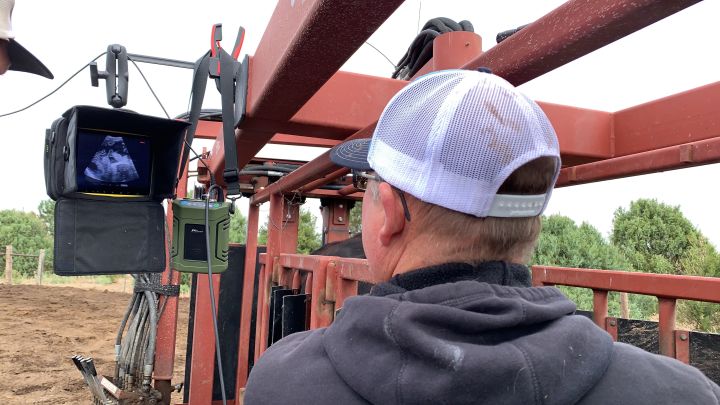
GETTING THE MOST OUT OF PREGCHECKING
Pregchecking is an important tool to manage your herd efficiently. There are multiple ways to determine the pregnancy status of an animal: wait and see, palpate, draw blood and ultrasound. As in many facets of the cattle industry, there is not a one size fits all solution. Most of us are addressing the questions, “Am I feeding open cattle?” and, “How do I determine which are my most productive animals?”. Ultrasound technology helps answer these questions.